According to Mercy Erhiawarien, Senior Manager of Programs at Halcyon, many African founders are building solutions in environments where startup ecosystems are still developing.
She noted that the program is structured not only to accelerate business growth but also to create a support network for entrepreneurs navigating these challenges.
The selected startups reflect a wide range of approaches to climate and food system challenges.
In Kenya, Agriflex is working to improve access to quality farm inputs while offering precision agriculture tools and advisory services to smallholder farmers.
Another Kenyan venture, Tawi Fresh, is building a digital marketplace that connects farmers to buyers, financing and logistics through artificial intelligence.
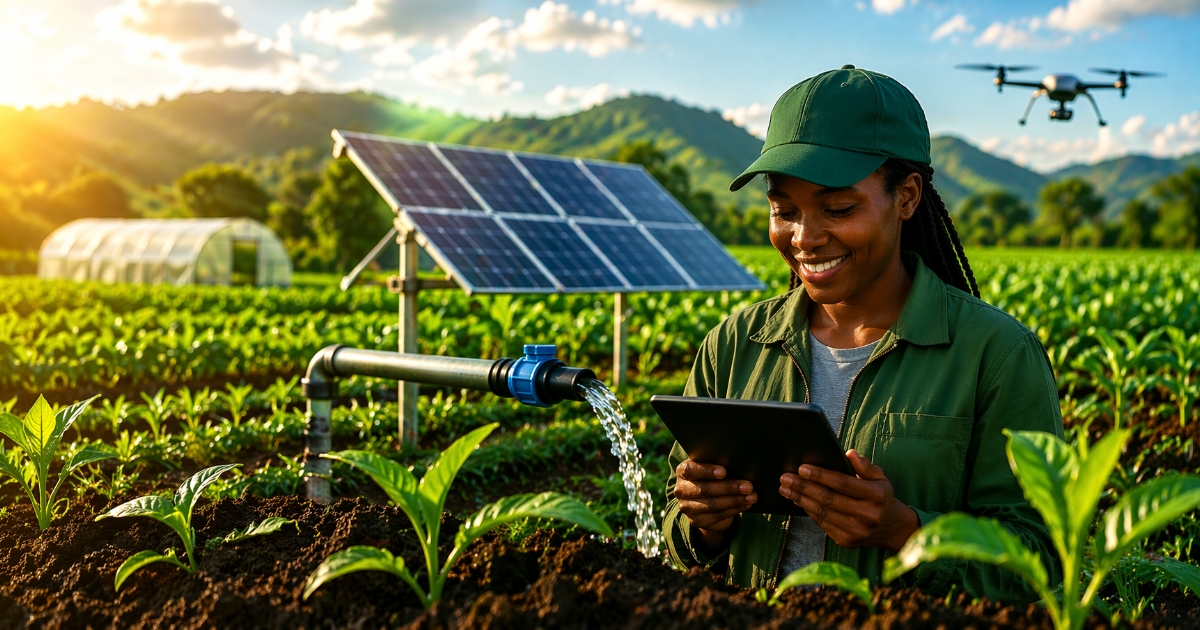
In Uganda, Drought Guard Africa is deploying solar-powered irrigation systems and water infrastructure in regions facing severe water shortages, including refugee settlements.
South Africa’s eSusFarm is combining financial technology with satellite data to expand access to insurance and credit for farmers exposed to climate risks.
Other startups in the cohort are addressing inefficiencies across agricultural value chains.
Nigeria’s Green Eden Farms is promoting climate-smart farming practices, while KAMIM Technologies is developing solar-powered cold storage systems to reduce post-harvest losses, an issue that costs sub-Saharan Africa billions each year.
In Zambia, Green Giraffe is digitising supply chains to help farmers meet export standards and access international markets.
Tanzania is represented by two ventures: Rada 360, which uses satellite data and artificial intelligence to provide real-time crop monitoring and early warning systems, and SafeSip, which delivers clean water through solar-powered distribution infrastructure.
In Ghana, Sesi Technologies is equipping farmers with tools to assess soil health and improve productivity.
The program is backed by Amazon Web Services, reflecting a broader shift toward supporting technology-driven solutions rather than relying solely on traditional development models.
This approach aligns with a growing recognition that scalable, entrepreneur-led innovations are critical to addressing systemic challenges in Africa.
Despite contributing less than 4 percent of global greenhouse gas emissions, Africa remains one of the regions most exposed to climate change impacts.
At the same time, agriculture continues to employ more than 60 percent of the workforce in many countries, making food security and climate adaptation central to economic stability.
Since launching its Africa-focused initiatives in 2022, Halcyon has supported more than 110 founders on the continent as part of a global network of over 650 entrepreneurs.
The latest cohort joins a growing pipeline of ventures tackling immediate environmental and food challenges and building businesses with the potential to scale across markets.