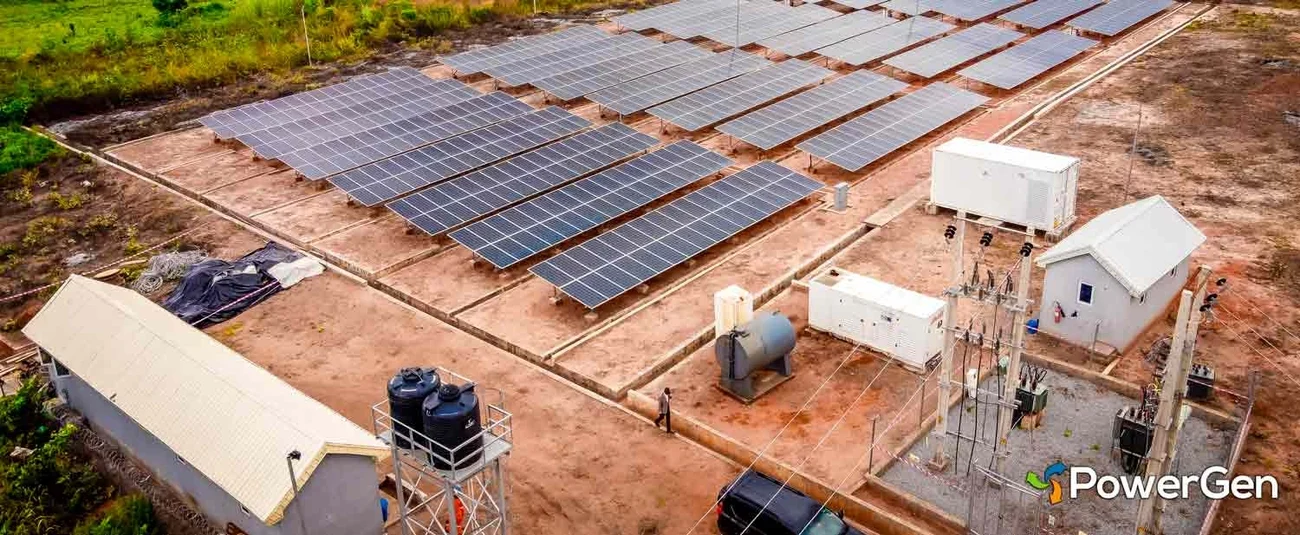
The mezzanine financing will support isolated mini-grids and systems connected to existing electricity distribution networks.
The investment will help PowerGen move additional projects from development into operation and deepen its presence in one of Africa’s largest electricity markets.
All On expects the projects financed through the transaction to provide up to 6,000 electricity connections, reach about 41,000 people, and add as much as 9 megawatts of generation capacity.
The planned developments are also expected to support approximately 470 jobs across the communities and businesses they serve.
Reliable electricity can help local companies reduce their dependence on private generators, operate equipment for longer periods, and direct more capital toward expansion rather than backup power.
All On’s investment effectively completes a Series C capital raise by PowerGen’s parent company, WindGen Power USA Inc.
Other investors in the round include ElectriFI, Impact Fund Denmark, the Sustainable Energy Fund for Africa, and InfraCo.
The investor group combines development finance, impact investment, and infrastructure expertise, giving PowerGen capital to expand different types of distributed energy projects.
PowerGen owns and operates renewable power and electricity distribution assets and has offices in Kenya, Nigeria, Sierra Leone, and the Democratic Republic of Congo.
PowerGen’s Nigerian portfolio includes the Toto Community Mini Grid Project in Nasarawa State, which became the country’s first interconnected hybrid solar mini-grid.
Unlike a fully isolated system, an interconnected mini-grid works with an existing distribution network and can supplement unreliable grid supply with locally generated electricity.
Nigeria’s electricity market creates a strong commercial case for such infrastructure.
World Bank data show that 62.5% of the country’s population had access to electricity in 2024, leaving a substantial share without a connection.
Many connected households and companies also face unreliable supply, increasing demand for decentralized systems that can serve customers beyond the effective reach of conventional power infrastructure.
Caroline Eboumbou, CEO of All On, said PowerGen had shown that renewable energy systems could serve areas where dependable electricity remained difficult to secure.
“PowerGen has demonstrated that renewable energy solutions can be efficiently deployed to serve communities and businesses where reliable electricity remains a challenge,” Eboumbou said.
“This investment reflects our confidence in the company’s ability to build on that experience and take its model further across Nigeria.”
The transaction adds private capital to Nigeria’s broader efforts to increase the use of interconnected mini-grids.
The Rural Electrification Agency has also moved forward with utility-enabled mini-grid projects designed to strengthen supply in underserved towns located near existing distribution infrastructure.
Aaron Cheng, CEO of PowerGen, said Nigeria remained an important market for the company and that the funding would support its continued growth.
“All On’s investment is a strong endorsement of PowerGen’s platform and our ability to deliver reliable renewable power at scale,” Cheng said.
“We are pleased to welcome All On as a strategic investor and look forward to working together to accelerate the deployment of renewable energy across Nigeria.”
All On is an independent impact investment company seeded by Shell to support Nigeria’s off-grid energy market.
It provides debt, equity, and business support to energy companies serving low-income households and small businesses.
The PowerGen investment shows how flexible financing can help renewable energy developers convert project pipelines into operating infrastructure.
Its economic value will depend on delivering the planned connections and generation capacity, giving more Nigerian households and businesses access to electricity that can support production, services, and employment.