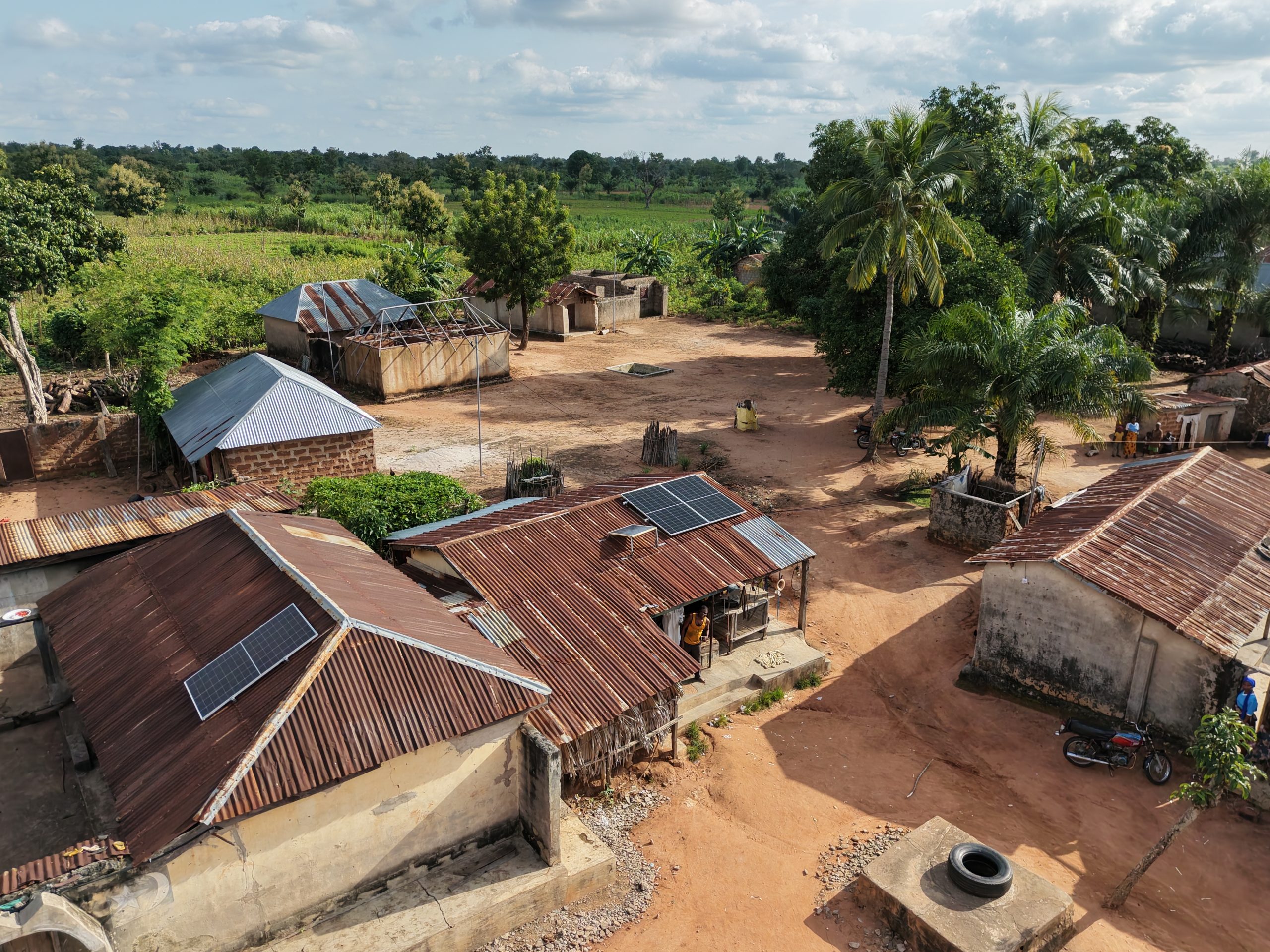
The financing will support procurement for approximately 150,000 new connections, potentially bringing electricity to 750,000 people for the first time.
The facility addresses a supply-chain constraint that has limited how quickly Okra can fulfill orders.
Instead of waiting for individual transactions to close before purchasing components, the company will be able to buy batteries, solar panels, and other equipment in advance and in larger quantities. This approach is intended to reduce procurement costs and shorten delivery times for developers installing its technology.
Okra supplies hardware and software to energy companies that build and operate off-grid electricity projects.
Its mesh-grid technology connects solar generation, battery storage, and smart controls across neighboring properties, allowing households and businesses to share available electricity.
The company says the system uses rooftop connections and low-voltage cables, reducing the distribution infrastructure required to serve dispersed communities.
According to the financing announcement, Okra has an installed base of more than 13,000 households and over 2.3 megawatts of capacity.
The planned additional connections would represent an increase of more than tenfold from that household base, although the figures describe the facility’s intended reach rather than completed installations.
Afnan Hannan, chief executive officer of Okra, said the financing would change how the company manages equipment orders and deliveries.
“Until now, we would only order components once a transaction had closed, in batches of a few thousand units,” Hannan said.
“With BII’s facility, we are procuring long lead time components, batteries, and solar PV equipment upfront and in volume, reducing costs and having stock ready when a developer signs.”
Hannan said equipment would reach Nigeria in less than a third of the previous delivery time.
The investment targets communities where conventional mini-grids can be expensive to install and individual solar home systems may offer insufficient power for business activities.
By allowing electricity to move between connected properties, mesh-grids provide another option for developers serving customers beyond the national grid.
Nigeria’s wider electrification strategy also relies on private companies deploying distributed renewable energy.
The World Bank-backed Distributed Access through Renewable Energy Scale-up program, known as DARES, has $750 million in financing and aims to provide new or improved electricity access to more than 17.5 million Nigerians.
Its objectives include expanding electricity services for households and small businesses through private-sector-led generation.
Geoffrey Manley, BII’s director and head of infrastructure and climate debt for Africa and South Asia, said the lender expects its support to help establish the commercial case for mesh-grids.
“Our flexible facility will enable Okra to procure critical components earlier and at greater scale, reducing costs and shortening delivery times,” Manley said.
For rural energy developers, the practical value of the financing lies in having equipment available when projects are ready to proceed.
BII’s support addresses the gap between securing a customer order and delivering the hardware, linking development finance to the procurement capacity needed to expand off-grid electricity services.