
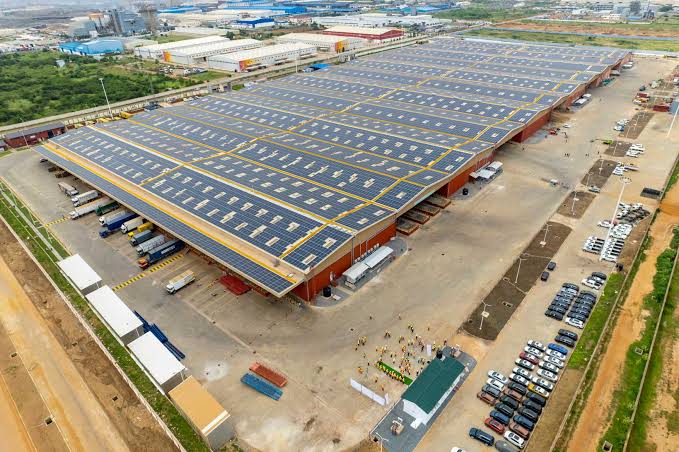
The Emerging Africa & Asia Infrastructure Fund (EAAIF) and Ninety One’s Africa Credit Opportunities strategy have committed $18.15 million in senior secured debt to LMI Holdings for a 100MWp solar plant in Dawa, Ghana.
The investment forms part of an $88.6 million financing package intended to supply lower-cost renewable electricity to industrial businesses in the Tema Free Zone and Dawa Industrial Zone.
EAAIF is contributing $15.65 million, while the Africa Credit Opportunities strategy is providing $2.5 million.
Both are managed by Ninety One. The financing will go through LMI subsidiaries Solar for Industries, which is responsible for solar generation, and Enclave Power Company, the group’s operating utility.
The International Finance Corporation (IFC) arranged the broader financing, contributing a $24.2 million direct loan within a $60.6 million debt package mobilized alongside EAAIF, Ninety One and the World Bank’s International Development Association.
LMI Holdings is investing $28 million in equity to complete the first-phase funding.
Announced on November 12, the transaction supports the first phase of a planned 200MW development.
The initial plant is expected to produce 129.5 gigawatt-hours annually. Enclave Power Company will transmit electricity approximately 40 kilometers over the national grid under a transmission service agreement, serving more than 95 industrial tenants across the two zones.
The investment extends LMI’s existing renewable energy operations in Ghana.
IFC previously supported its 16.82MW rooftop solar installation in the Tema Free Zone.
Businesses targeted by the wider Solar for Industries initiative include food processors, cement and steel producers, textile companies and light manufacturers, linking the energy investment directly to industrial production.
“Ghana’s clean energy transition is also an investment in the country’s industrial growth and competitiveness,” said Nathalie Kouassi Akon, IFC’s division director for West Africa Gulf of Guinea.
For industrial customers, the project’s commercial value lies in its intended reduction of electricity costs and emissions associated with production.
Its structure also connects private generation with an established industrial distribution business, using the national grid to deliver solar electricity to manufacturers beyond the plant’s immediate location.