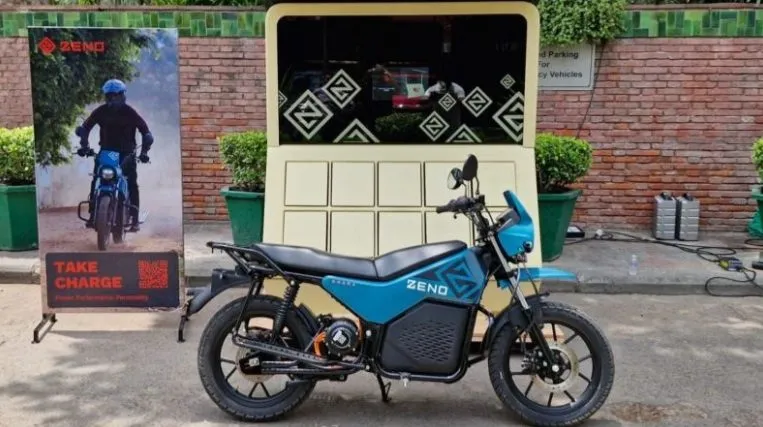
The investment will support the company’s efforts to scale its operations and strengthen its position in the region’s growing clean transport sector.
Zeno was founded in 2022 by Michael Spencer, a former Tesla executive, to develop electric mobility solutions for emerging markets.
The company focuses on two- and three-wheel electric vehicles, a segment widely used in East Africa’s urban transport systems, particularly in motorcycle taxi services commonly known as boda bodas.
In these markets, reliability, charging availability, and vehicle downtime are critical determinants of whether drivers adopt electric alternatives.
To address these challenges, Zeno has developed a charging system that combines several options for riders.
Its infrastructure includes compact battery-swapping stations, public fast-charging points, and home-charging solutions.
This hybrid approach allows riders to choose how they recharge their vehicles, offering greater flexibility than models that rely solely on battery swapping.
The company currently operates in four cities across East Africa and has deployed more than 150 charging locations to support its vehicles and energy services.
This network is part of Zeno’s broader strategy to build an integrated ecosystem linking electric vehicles, battery technology, and charging infrastructure.
The $25 million financing package combines equity and debt. Climate technology investor Congruent Ventures led the equity portion of the round, with participation from more than a dozen new and existing investors.
In addition, the company secured debt financing from Trifecta Capital and Camber Road to support its expansion plans.
Zeno intends to use the new capital to scale its charging network and increase production of its flagship electric motorcycle, the Emara.
The company says demand for the model has grown quickly, with more than 25,000 retail and fleet customers currently on a waiting list for deliveries.
Alongside increasing production capacity, the startup plans to expand its presence in additional cities and broaden its product offerings as it adds more riders and energy subscribers to its platform.
The move comes as electric mobility continues to gain traction in Africa, where rising fuel costs and the need for cleaner transport are driving interest in electric two-wheelers and supporting infrastructure.