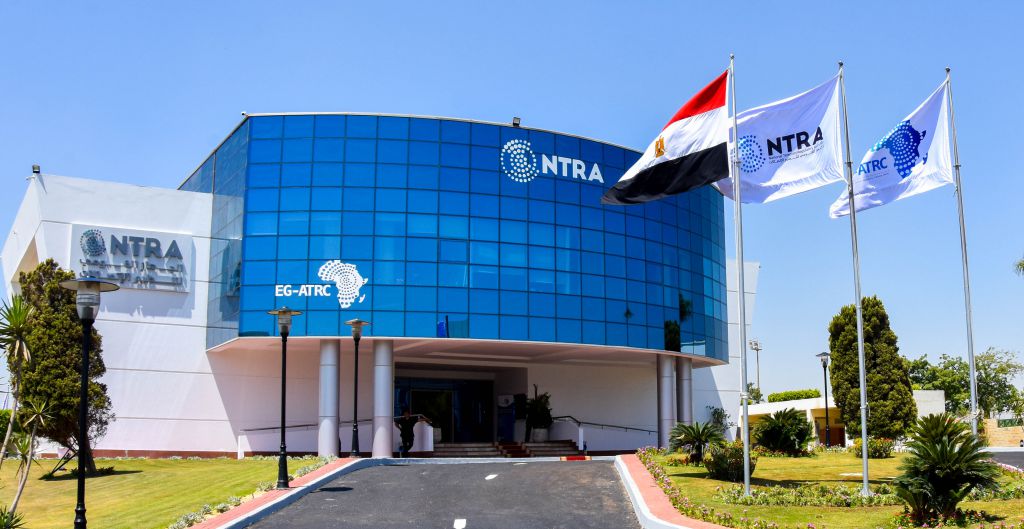
Announced on August 18, 2026, the test will help Egypt assess additional spectrum for high-capacity 5G services and future mobile technologies.
The trial involved activating what NTRA described as Africa’s first mobile base station operating on the upper 6 GHz band, also known as U6GHz.
The partners then completed the continent’s first mobile data call over the spectrum, demonstrating its technical ability to support commercial mobile communications.
NTRA did not announce a timetable for allocating the band or making services commercially available.
The 1.7 Gbps result indicates that the band could provide operators with additional network capacity in densely populated areas, business districts, transport centers, and other locations where large numbers of users access mobile data simultaneously.
Wider channels within the band can allow networks to carry more traffic while maintaining service quality during periods of high demand.
NTRA is examining the band as part of Egypt’s long-term national spectrum plan for 2030–2035, which is still under preparation.
The regulator considers spectrum a strategic national resource and said the trial will inform decisions on how the country can use its available frequencies more efficiently as demand for mobile data increases.
The test follows broader international work on the upper 6 GHz band. The International Telecommunication Union’s 2023 World Radiocommunication Conference adopted rules covering the use of frequencies between 6.425 GHz and 7.125 GHz for International Mobile Telecommunications.
The ITU framework also requires countries to protect existing satellite, fixed-service, radio astronomy, and other authorized users of the spectrum.
Egypt is assessing the band after launching commercial 5G services through Telecom Egypt, Vodafone Egypt, Orange Egypt, and e& Egypt in June 2025.
The four operators had previously secured 5G and related licenses valued at approximately $675 million, creating the regulatory foundation for investment in faster mobile networks and new digital services.
Egypt’s Ministry of Communications and Information Technology said the licensing process was intended to improve network capacity, encourage telecom investment, and increase competition in the market.
Access to additional mid-band spectrum could help operators manage the data requirements of artificial intelligence, cloud computing, Internet of Things systems, and virtual and augmented reality services.
These applications require reliable connections and substantial network capacity, making spectrum availability an important consideration for companies investing in data centers, smart infrastructure, digital platforms, and enterprise technology.
The trial gives Egypt local technical evidence that can support those regulatory and investment decisions as the country develops its 2030–2035 spectrum plan.
For operators, technology providers, and digital businesses, the next important development will be whether NTRA converts the test results into a clear framework for commercial use of the upper 6 GHz band.