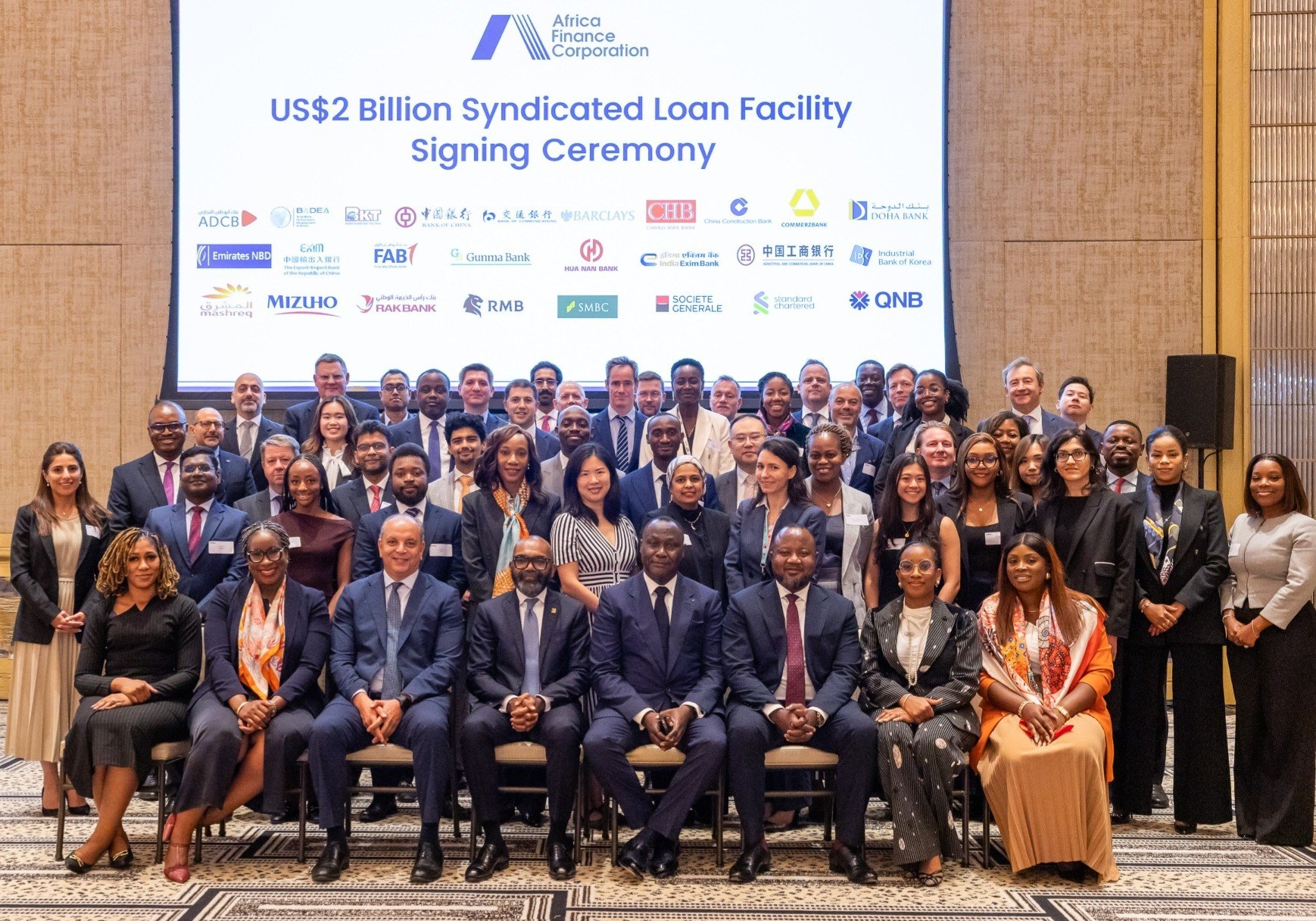
The financing exceeded its initial target of $1.6 billion after attracting significant interest from global financial institutions.
Lenders from Asia-Pacific and Europe each accounted for 35% of commitments, while institutions from the Middle East contributed 25% and African lenders provided the remaining 5%.
The new facility will strengthen AFC’s ability to finance large-scale projects across key sectors including energy, transport, logistics, industry and telecommunications.
The corporation has increasingly focused on developing integrated infrastructure ecosystems that support industrialization, trade and job creation rather than standalone projects.
“This transaction reflects growing recognition that Africa’s next phase of growth will be driven not by isolated projects, but by integrated infrastructure systems that connect energy, transport, logistics, industry and technology,” said Samaila Zubairu, President and Chief Executive Officer of AFC.
“As global capital seeks resilient long-term growth opportunities, AFC has positioned itself at the centre of Africa’s transformation by developing the platforms and ecosystems that convert infrastructure into industrialisation, jobs and economic competitiveness,” he added.
Founded in 2007 to address Africa’s infrastructure financing gap, AFC has grown into one of the continent’s leading development finance institutions.
The organization has invested more than $19 billion in projects across 36 African countries and now counts 48 member states.
Its portfolio spans critical sectors including power, transport, heavy industry, natural resources and telecommunications.
The financing comes as AFC continues to expand its continental footprint.
Earlier this year, the institution announced plans to establish its first regional office outside Lagos in Nairobi, Kenya, a move expected to strengthen its presence in East Africa and support plans to mobilize additional investments across the region.
AFC has indicated that it intends to deploy and mobilize more than $2 billion in East Africa over the next three to five years.
Investor confidence in AFC has also been supported by its improving credit profile.
The corporation recently received an ‘A’ long-term issuer rating with a Positive Outlook from S&P Global Ratings, complementing its existing A3 rating from Moody’s and A+ rating from Japan Credit Rating Agency.
These investment-grade ratings have helped AFC broaden access to international capital markets while lowering funding costs for development projects across Africa.
According to Reuters, Zubairu said the new financing will enable AFC to undertake more comprehensive infrastructure and industrial planning initiatives across countries, regions and economic corridors.
He pointed to the corporation’s track record in supporting major projects such as Nigeria’s Dangote Refinery and one of Africa’s largest copper smelters in the Democratic Republic of Congo as evidence of its ability to execute large-scale investments.
The syndicated loan was coordinated by Barclays, Commerzbank, First Abu Dhabi Bank and FirstRand Bank through its Rand Merchant Bank division.
More than twenty additional financial institutions from Europe, Asia, the Middle East and Africa also participated in the transaction, reflecting broad-based support from the international banking community.
Banji Fehintola, AFC’s Executive Board Member and Head of Financial Services, described the financing as a landmark achievement for the institution.
“Closing AFC’s largest-ever syndicated loan facility in a complex global environment is a defining milestone, one that reflects the unwavering confidence our lending partners place in AFC’s credit strength, strategic relevance and execution capabilities,” he said.
“The strong support from a broad group of international financial institutions reaffirms sustained investor conviction in AFC’s mission to deliver transformative infrastructure and industrial projects with lasting economic impact across Africa.”
The facility also aligns with AFC’s broader efforts to mobilize long-term capital for infrastructure development.
In its recently released State of Africa’s Infrastructure Report 2026, the corporation argued that Africa’s future growth will increasingly depend on deploying domestic institutional capital, including pension funds, into infrastructure and industrial projects that can drive economic transformation.