SMEs and Financial Ecosystems
A significant portion of the commitments focused on small and medium-sized enterprises (SMEs), primarily through credit lines to local financial institutions and investments in private equity and venture capital vehicles.
In 2025 alone, the EIB committed more than €350 million to new investment funds, including vehicles managed by Amethis and Ardian.
Through the Boost Africa initiative, it also supported the Africa Venture Finance Programme hosted by Oxford University’s Saïd Business School, which engaged more than 40 Africa-based venture capital fund managers during the year.
Rather than direct lending to individual businesses, the approach relied on strengthening local financial intermediaries and fund managers.
This structure channels capital through domestic banking systems and investment platforms, expanding access to financing for SMEs across multiple markets.
Agriculture and Value Chains
Part of the 2025 portfolio targeted agricultural upgrading and value chain development.
Financing supported cocoa sector improvements in Côte d’Ivoire and broader agricultural value chain initiatives in Sierra Leone and Guinea.
These investments focused on processing capacity, productivity improvements, and strengthening export-linked agricultural systems.
Health and Pharmaceutical Manufacturing
Healthcare featured prominently within the year’s commitments.
EIB Global signed a guarantee agreement with MedAccess under the Human Development Accelerator, a joint programme involving the European Commission and the Gates Foundation, aimed at expanding access to essential medical supplies.
The institution also supported mRNA vaccine production capacity in Rwanda and continued collaboration with BioNTech on manufacturing initiatives in Senegal and Ghana.
In Angola, financing helped fund a national cervical cancer vaccination campaign targeting more than two million girls.
These investments extended beyond service delivery and into pharmaceutical production and supply chain development.
Geographic Distribution
The largest recipient countries in 2025 were Morocco, Nigeria, Mauritania, Egypt, and Malawi. Smaller markets, including The Gambia, São Tomé and Príncipe, and Cabo Verde, also received financing.
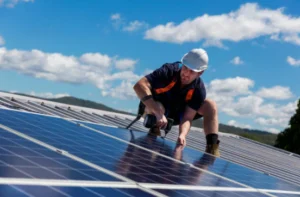
In North Africa specifically, projects included industrial decarbonization grants in Egypt, solar infrastructure investments, and climate-resilient water systems in Morocco.
The spread of capital across large and smaller economies indicates diversified deployment rather than concentration in a limited number of markets.
Alignment with Broader Strategy
In 2025, the EIB Group reported reaching its €100 billion investment mobilization target under the EU’s Global Gateway strategy ahead of schedule, with 75% of investments outside the European Union aligned to that framework.
Africa accounted for a substantial portion of those external allocations.
Beyond direct financing, the EIB continues to co-lead the Global Emerging Markets Risk Database (GEMs) with the World Bank Group, a consortium that pools historical credit risk data from emerging markets to strengthen risk assessment models and facilitate private capital participation.
The 2025 EIB Africa Capital Profile
The €3.1 billion commitment in 2025 can be summarized through four core data points:
€3.1 billion committed across Africa
46% allocated to climate and environmental sustainability
€350+ million directed into investment funds
€73 billion mobilized across the continent over four years
Taken together, the figures provide a structured view of how one of the world’s largest multilateral development lenders deployed capital across Africa in 2025.