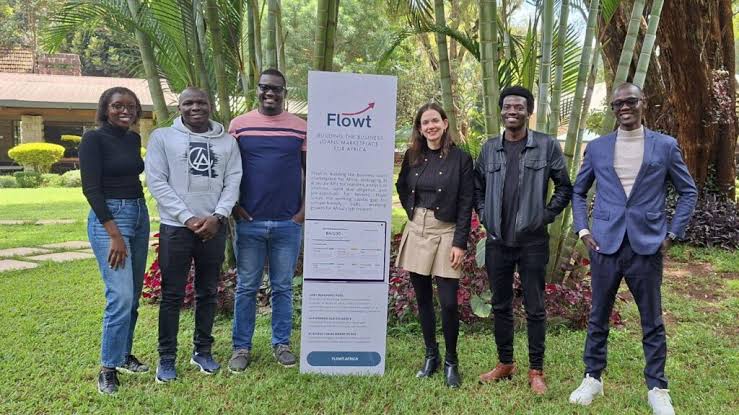
The Nairobi-based company received backing from Delta40 Fund I and Impacc, alongside grant support from the Argidius Foundation, for its lending operations and financial intelligence technology.
Flowt has also issued its first working-capital facility to GreenBay, a Kenyan circular commerce company that sources, refurbishes and sells pre-owned household appliances and solar products.
The amount and terms of the facility were not disclosed.
Founded by Elana Laichena, Flowt uses artificial intelligence to assess businesses through the financial information they already generate.
Its platform connects to accounting systems and examines bank and mobile-money records to verify revenue, cash movement and repayment capacity.
For the GreenBay transaction, Flowt connected to the company’s Odoo accounting system and compared the operational data with its bank statements.
The process allowed Flowt to assess the company’s financial position and repayment capacity within days, using transaction history instead of relying primarily on physical collateral.
GreenBay used the financing to purchase additional inventory and has begun making repayments through a Flowt wallet.
The wallet separates cash used for inventory purchases and customer collections from money allocated to operating expenses, giving Flowt greater visibility over the financed activity and the cash available for repayment.
“Flowt lends against verified transaction history, which makes working capital both fast and affordable,” Laichena said.
She explained that many small businesses struggle to obtain loans because they lack conventional collateral, while the cost and duration of manual due diligence can make smaller facilities uneconomical for lenders.
Flowt’s technology includes a financial health tool that connects to platforms such as QuickBooks, Zoho and Odoo and generates more than 20 financial indicators.
Its due diligence software also categorizes transactions from bank and M-Pesa statements, prepares cash-based financial information and checks for potential risk signals.
Delta40 said the startup has tested its platform with more than 15 potential borrowers and identified a prequalified pipeline representing between $1 million and $2 million in loan demand.
The company’s initial borrowers operate in areas including green manufacturing, climate-smart agricultural processing, distributed renewable energy and clean cooking.
Flowt is continuing to raise equity, debt and repayable grants as it works toward a loan book of up to $1 million by the end of 2026.
Flowt was developed within the Delta40 Venture Studio from the initial concept through the launch of its minimum viable product.
Delta40 plans to continue supporting the company by introducing it to lenders and co-investors and providing operational and financial management support.
Impacc has provided equity and debt, while the Argidius Foundation has supplied grant funding for the company’s development.
GreenBay’s operating history provides an early commercial test for Flowt’s data-based lending model.
A CLASP-supported pilot reported by Efficiency for Access recorded 413 second-life appliances sold, $57,600 in revenue and more than 11 metric tons of electronic waste diverted from landfills.
The results indicated demand for refurbished appliances, but GreenBay’s ability to increase sales remained closely tied to the amount of inventory it could finance and hold.
The financing addresses a wider constraint facing African businesses.
A 2025 International Finance Corporation handbook estimated unmet financing demand among micro, small and medium-sized enterprises in Sub-Saharan Africa at $331 billion.
The IFC identified limited financial records, insufficient assets and the high cost of serving smaller borrowers as key barriers, while noting that digital data and analytics can support faster credit assessments and reduce lending costs.
The GreenBay facility moves Flowt’s model from product testing into active lending at a point where many small climate businesses face a practical constraint: converting customer demand into inventory and revenue.
Its ability to generate reliable repayment records from transaction data will determine whether the platform can support larger lending portfolios and give other financial institutions a clearer basis for financing African climate-focused enterprises.