Rand Merchant Bank, a division of FirstRand Bank, arranged the financing alongside Absa and Standard Bank, according to a company announcement.
The dollar value reflects the official euro reference rate published on August 17, 2026, when Genser announced the transaction.
The company said the facilities would provide working capital for ongoing engineering, procurement, and construction projects while giving it greater financial capacity to pursue its regional growth plans.
Founder and CEO Baafour Asiamah-Adjei told Semafor that Genser’s immediate investment program includes converting open-cycle gas turbine plants into combined-cycle facilities.
Combined-cycle systems recover heat that would otherwise be lost and use it to generate additional electricity, allowing operators to produce more power from the same volume of fuel.
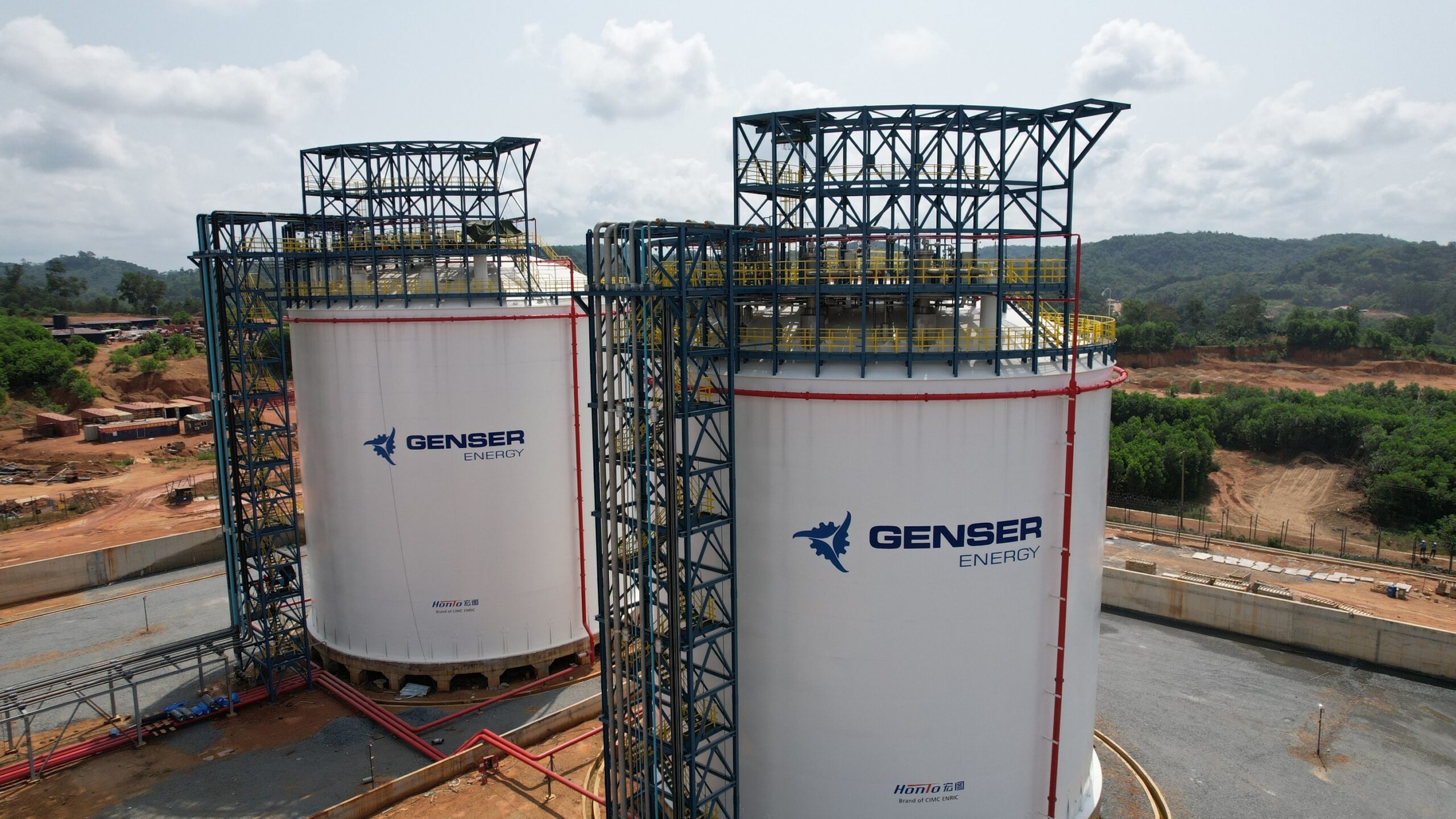
Genser also plans to commission its gas conditioning plant in Prestea and the Takoradi Natural Gas Liquids Export Terminal before the end of 2026.
The Prestea facility will process and stabilize gas before it enters the company’s pipeline and power-generation network, while the Takoradi terminal will provide 40,000 cubic meters of storage capacity for propane and butane.Part of the financing will support Genser’s planned 470-megawatt combined-cycle plant at Taboth in Côte d’Ivoire.
On August 5, the Ivorian government approved the project’s concession, which covers the plant’s design, financing, construction, ownership, operation, maintenance, and eventual transfer.
The Taboth development is one of three recently approved private power projects with combined capacity of about 735 megawatts, reflecting Côte d’Ivoire’s effort to meet rising domestic demand while maintaining its role in regional electricity trade.
The Taboth project would move Genser from supplying cross-border electricity into Côte d’Ivoire toward developing generation capacity inside the country.
That expansion would also diversify the company beyond Ghana, where its business remains closely connected to mining and other energy-intensive industries.
Founded in 2006, Genser has built and commissioned seven power plants in Ghana and one in Burkina Faso.
The company reports installed generation capacity exceeding 334 megawatts and owns a 436-kilometer natural gas pipeline network across Ghana.
Its integrated infrastructure allows Genser to transport gas and generate electricity for industrial customers and utilities while participating in regional power exports.
The credit package follows Genser’s July 2026 redemption of the entire 40.4% interest previously held by Oppenheimer Partners, ending the South African investor’s five-year involvement in the company.
Genser did not disclose the financial terms of the shareholder exit.Adjei said Genser carries about $1 billion in debt and plans to seek $350 million from an equity sale to reduce its borrowing burden and finance further expansion.
The company remains unprofitable because financing costs and continued reinvestment absorb earnings during its growth phase.
“Our financing cost almost eats up all the profit we would have ever made, but we will become profitable immediately we stop growing,” Adjei told Semafor.
Genser is also evaluating lower-cost gas supplies from Nigeria, where Adjei estimates prices are about one-third below those available from suppliers in Ghana and Côte d’Ivoire.
The company aims to make a final investment decision by the end of 2027 and begin receiving Nigerian gas by barge in 2030, although the plan remains subject to commercial agreements and infrastructure development.
Lower fuel costs would be important for Genser’s margins and its ability to offer competitive electricity prices to industrial customers.
The financing comes as African energy infrastructure continues to face a major capital shortage.
The International Energy Agency estimates that roughly 600 million Africans lack electricity and that $150 billion must be invested by 2035 to close the access gap.
Genser’s industrial and utility-scale projects will not directly provide last-mile household connections, but reliable power for mines, businesses, and national grids can support production, protect jobs, and improve the competitiveness of energy-intensive industries.
For investors, the transaction demonstrates the capacity of African banks to structure large regional energy financings while also highlighting the debt burden involved in developing gas pipelines, processing plants, terminals, and power stations.
Genser’s ability to commission its Ghanaian assets, advance the Taboth plant, and replace part of its debt with equity will determine whether its infrastructure expansion produces a financially sustainable regional energy business.