
The Empower Africa Business Platform is Now Live !!!

Sub-Saharan Africa has the lowest higher education enrollment rate in the world, with only about 9% of university-age students enrolled in tertiary education compared to a global average of over 40%.
At the same time, Africa has the youngest population globally, with millions of students reaching university age every year.
The continent has the youngest population in the world, with a median age of 19, and its workforce is projected to reach one billion within the next decade.
That demographic reality is increasing the urgency for universities to expand access, improve delivery, and align learning with labor market needs.
Yet access to higher education remains limited, with UNESCO data showing that while the global gross enrolment ratio in tertiary education reached 42% in 2022, Sub-Saharan Africa stood at just 9%.
That gap helps explain why digital expansion is becoming a strategic priority for universities across the continent.
elearnAfricaLMS is positioning itself inside that gap.
The London-headquartered company works with African universities to build and run scalable online education systems.
Operating across West Africa, East Africa, and Southern Africa, it provides learning management system infrastructure, online program management, and tuition structuring models that help institutions expand access while building more stable revenue streams.
Rather than selling software alone, the company is trying to solve a broader institutional challenge: how universities can deliver quality education at scale in markets shaped by infrastructure constraints, uneven funding, and cross-border financial complexity.
At inception, elearnAfricaLMS focused on a structural weakness in African higher education.
Many universities had credible academic programs and established institutional brands, but lacked the digital infrastructure, online program management capacity, and tuition collection systems needed to scale beyond the physical campus.
In a region where demand for tertiary education continues to outpace available capacity, that limitation carries both educational and economic consequences.
UNESCO has noted that higher education participation in Sub-Saharan Africa remains well below the global average, even as demand continues to rise.
elearnAfricaLMS built a model around that problem.
The company combines LMS infrastructure, program design, enrollment support, and tuition systems into a single operating model for partner universities.
Its argument is straightforward: if universities can digitise delivery and improve revenue collection, they can scale more sustainably and serve more learners.
In practice, elearnAfricaLMS operates as an online program management partner.
The company provides universities with digital learning infrastructure, program support, marketing systems, and tuition collection tools.
Instead of relying on a standard licensing model, it generates revenue through shared tuition from jointly delivered programs.
That structure matters in African higher education, where institutions often face budget pressure and may be reluctant to make large upfront technology investments.
By linking revenue to actual program performance, elearnAfricaLMS lowers entry risk for partner institutions while embedding itself more deeply in university operations.
The company says it has also adjusted its model to reflect African market realities. That includes installment-based payment structures, localized enrollment strategies, and systems designed to manage cross-border tuition and currency exposure.
What differentiates elearnAfricaLMS from a typical edtech vendor is its emphasis on infrastructure and financial architecture, not just software.
Many education platforms provide course hosting or content delivery tools.
elearnAfricaLMS instead positions itself as a long-term strategic partner that combines technology, program management, and cross-border tuition structuring.
That distinction is important in a fragmented market.
Higher education expansion in Africa is not only a content problem or a classroom problem. It is also a systems problem involving regulation, affordability, collections, and institutional capacity.
The company’s model reflects that reality by treating online education as an operational and financial system, not just a digital interface.
elearnAfricaLMS says its progress is reflected in multi-year partnerships with universities across West Africa and Southern Africa, the rollout of online degree programs, and a multi-million-dollar contracted revenue pipeline.
Publicly referenced partnerships point to the kind of institutional work it is doing.
Njala University announced a partnership with eLearnAfricaLMS to develop online program management systems, while Rhodes Business School partnered with the company to build a virtual learning environment.
The University of Nigeria, Nsukka, also announced the launch of an online Master of Public Administration program developed in collaboration with the broader eLearnAfrica initiative.
These examples help situate the company’s role not as a one-off service provider, but as a platform partner embedded in university transformation efforts.
The company identifies regulatory and financial fragmentation as its most complex scaling challenge.
That is not surprising.
African education markets are not uniform.
Tuition systems, accreditation requirements, payment channels, and currency conditions vary across countries.
Investors and international partners often underestimate how much this fragmentation shapes execution on the ground.
According to elearnAfricaLMS, the response has been to design flexible operating and payment systems tailored to each market rather than forcing one structure across all of them.
That lesson extends beyond one company.
Businesses scaling in Africa often succeed not by simplifying complexity away, but by building systems that can absorb it.
Several structural trends are reshaping higher education across Africa.
The first is demographics.
Sub-Saharan Africa is expected to account for more than half of global population growth between 2022 and 2050, and by mid-century, the continent will host a large share of the world’s young people.
That demographic shift is increasing pressure on universities to expand access and graduate more students with market-relevant skills.
The second is the growing skills gap.
Institutions across the continent face increasing scrutiny over whether graduates are equipped for evolving labor markets, particularly in digital, technical, and professional fields.
The third is institutional digitization. Universities are exploring online delivery models not only to reach more students but also to diversify revenue streams and operate more efficiently.
These pressures are forcing institutions to rethink how higher education is delivered and financed.
Expanding physical campuses alone is unlikely to keep pace with demand, and many universities are turning to digital systems to extend their reach.
For companies working in this space, the challenge is not simply building education technology.
It is helping universities develop operational models that allow online programs to function sustainably across complex regulatory and financial environments.
How institutions solve that problem will shape the scale and accessibility of higher education across the continent in the coming decades.

Wasoko, founded in 2013, is an innovative e-commerce platform rapidly reshaping Africa’s online shopping landscape.

Complete Farmer is a Ghanaian agritech startup that is transforming the agricultural landscape in Africa.
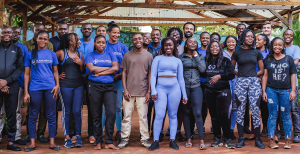
Ilara Health is an innovative healthtech startup dedicated to providing diagnostic equipment and services to small clinics and pharmacies situated on the outskirts of urban areas in Kenya.