African economies had shown resilience despite global trade tensions, supported by relatively stable financial conditions, targeted fiscal measures and strong performance in sectors such as technology.
That momentum had led analysts to anticipate stronger global growth heading into 2026.
However, the escalation of conflict involving the United States, Israel and Iran has disrupted that trajectory.
The closure of the Strait of Hormuz, a critical artery for global energy supplies, has triggered a sharp rise in oil and gas prices, pushing up costs across multiple sectors, including transport, agriculture and manufacturing.
The IMF notes that the shock is being transmitted through several channels.
Higher energy prices are increasing production costs and weakening household purchasing power, while rising inflation is prompting businesses and workers to adjust prices and wages upward.
At the same time, tighter financial conditions, marked by capital outflows, higher risk premiums and a stronger US dollar, are making borrowing more expensive for many African economies.
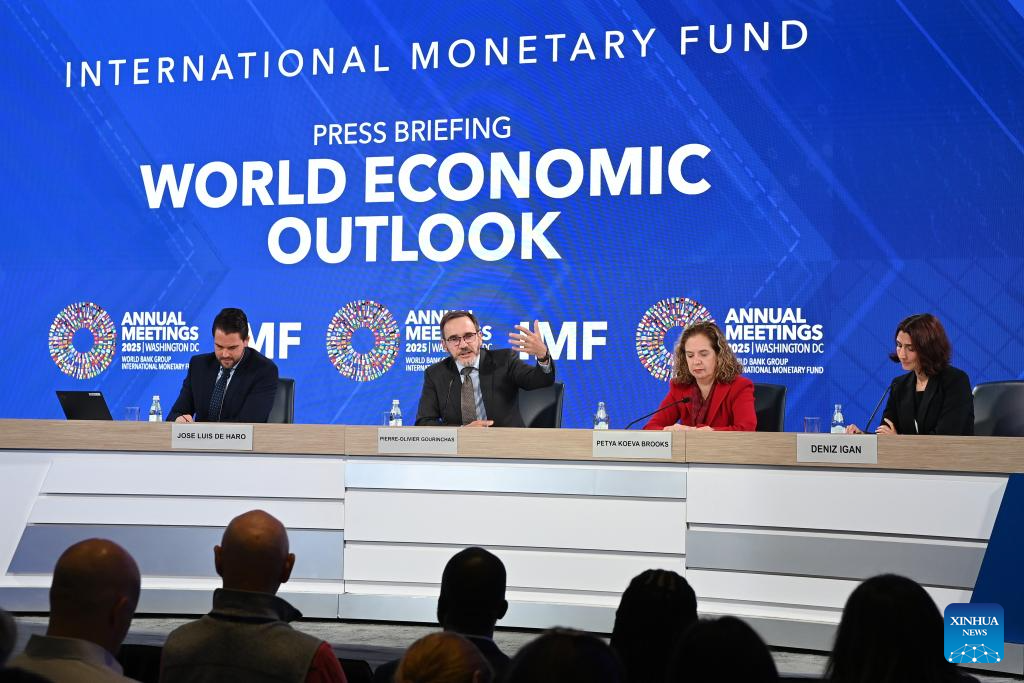
“These shocks are interacting in ways that could amplify vulnerabilities, particularly in countries with limited fiscal buffers,” Igan explained.
Even under a relatively contained scenario where the conflict is short-lived, the IMF expects global growth to slow to around 3.1 per cent, with inflation rising to 4.4 per cent.
In a more prolonged or severe scenario, growth could fall as low as 2 per cent, while inflation may exceed 6 per cent.
The impact is expected to be uneven across Africa. Oil-importing countries, especially low-income economies with high debt levels, are likely to face the greatest strain due to rising import bills and weakening currencies. In contrast, energy exporters may benefit from higher prices, though they remain exposed to volatility and policy risks.
Recent IMF analysis shows that Sub-Saharan Africa entered 2026 with strong momentum after growth reached about 4.5 per cent in 2025, the fastest pace in a decade. However, that progress is now under threat from rising energy, fertiliser and shipping costs linked to the conflict.
The Fund cautions that the scale and duration of the war will be critical in determining how severe the economic fallout becomes.
Prolonged disruptions to energy supplies and trade routes could deepen the slowdown and further erode gains made in recent years.
At the same time, the IMF suggests that the crisis could accelerate longer-term structural shifts.
These include increased investment in renewable energy and technological innovation, which could help countries reduce exposure to future external shocks.
Pierre-Olivier Gourinchas, the IMF’s Economic Counsellor, said the conflict highlights broader changes in the global economic order.
“Growing strains on international order are pushing toward a multipolar world,” he said. “But a more multipolar world need not be a more fragmented one.”
He added that countries are already diversifying trade partnerships beyond traditional alliances, noting that “with the right policies, including a swift cessation of hostilities and reopening of the Strait of Hormuz, the damage can remain limited.”
For Africa, however, the immediate challenge remains navigating a more uncertain global environment, where geopolitical tensions, declining aid flows and rising costs are converging to test economic resilience once again.