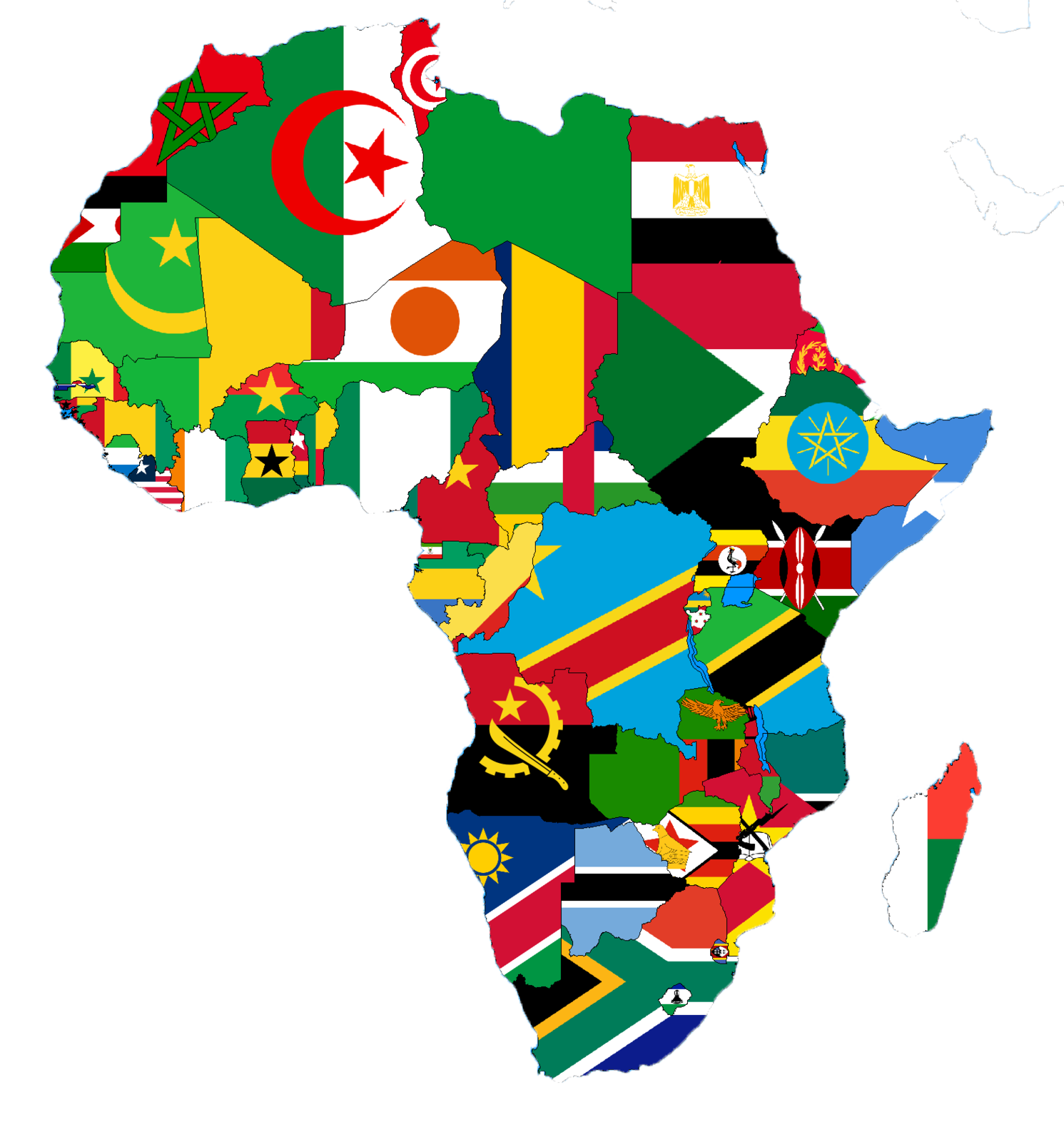
Europe, often perceived as roughly the same size, is in fact less than one-third of Africa’s land area.
The African Union recently backed the “Correct the Map” campaign, urging schools and institutions to adopt Equal Earth, an equal-area projection that shows Africa’s true scale.
This is not just about representation—it’s about correcting decades of visual bias that shape perception and, by extension, business strategy.
So How Big is Africa, Really?
When seen on an equal-area projection, Africa’s true dimensions become clear—and they challenge long-held assumptions about global balance.
- Land Area
- Africa: ~30.15 million km²
- Asia: ~44.6 million km² (only ~1.5× larger than Africa, not 3–4× as Mercator maps imply)
- North America: ~24.7 million km² (smaller than Africa)
- South America: ~17.8 million km² (just over half Africa’s size)
- Europe: ~10.4 million km² (less than one-third of Africa)
- Australia (Oceania): ~8.5 million km² (Africa is nearly 4× larger)
Visual reality: Africa is the second-largest continent after Asia. Yet on distorted maps, it often appears dwarfed by North America or comparable to Europe—both far smaller.
- Population (2024)
- Africa: ~1.5 billion
- Asia: ~4.8–4.9 billion (the only region larger)
- Europe: ~740 million (half of Africa)
- North America: ~600 million (about 40% of Africa)
- South America: ~440 million (less than one-third of Africa)
- Oceania: ~45 million (tiny compared to Africa)
Demographic reality: Africa is already the second most populous continent and will account for more than half of global population growth between now and 2050.
- Median Age (youthful vs aging)
- Africa: ~19 years (youngest in the world)
- Asia: ~32
- South America: ~31
- North America: ~38
- Europe: ~44 (oldest)
Implication: Africa’s youth bulge represents a future labor force and consumer base unmatched elsewhere.
- Economic Integration (intra-regional trade, % of total trade)
- Africa: ~15–17%
- Asia: ~59%
- Europe: ~68%
- North America (USMCA): ~40%
- South America (MERCOSUR): ~20%
Trade reality: Africa lags far behind, but this is why AfCFTA matters—closing even part of this gap could transform competitiveness.
- Digital Penetration (internet users, % of population, 2024)
- Africa: ~38%
- Asia: ~66%
- South America: ~81%
- North America: ~90%
- Europe: ~92%
- Oceania: ~72%
Connectivity reality: Africa is digitally behind, but its adoption curve is the steepest, especially via mobile-first innovations.
For decades, Africa has been viewed through a distorted lens—literally and figuratively.
The result has been chronic underestimation of the continent’s scale, complexity, and opportunity.
As seen above, the reality is different. Africa is vast—larger than North America, Europe, and China combined.
It is the second most populous continent, home to the world’s youngest demographic, and a market whose demand will shape global consumption patterns in the decades ahead.
It also contains 60% of the world’s best solar resources, 60% of uncultivated arable land, and increasingly competitive urban hubs. These are not abstract statistics; they are the building blocks of a new growth frontier.
Yet size alone is not enough. Africa’s intra-regional trade is still only a fraction of global benchmarks, digital penetration lags behind the world average, and logistics bottlenecks remain real.
This is why initiatives like the African Continental Free Trade Area (AfCFTA), accelerated digital infrastructure, and renewable energy investments are so critical—they are the levers that can convert Africa’s latent size into actual, scalable opportunity.