Microsoft estimates that DeepSeek accounts for between 11% and 14% of chatbot usage in markets such as Uganda, Niger and Zimbabwe, with adoption reaching as high as 20% in Ethiopia and Zimbabwe.
Yazbeck acknowledged the growing presence of Chinese technology providers in the region, framing Microsoft’s strategy as a direct response. “Chinese technology is active in Africa, and our job is to compete,” he said.
Alongside training efforts, Microsoft is also strengthening the distribution of its AI products through a partnership with telecom giant MTN Group.
The agreement, first unveiled in November 2025, integrates Microsoft 365 and its AI assistant, Copilot, into MTN’s consumer and enterprise offerings.
With MTN serving about 300 million subscribers across Africa, the partnership provides Microsoft with a wide channel to scale adoption of its tools.
MTN Group CEO Ralph Mupita said the collaboration is expected to accelerate digital transformation across the continent.
“This partnership opens new pathways for innovation and opportunity that will define the continent’s next phase of progress,” Mupita said.
Through the rollout, users will be able to access Microsoft’s productivity and AI tools across multiple devices, alongside built-in security features such as phishing protection and data loss prevention.
Microsoft says early adoption is already showing measurable impact. According to Yazbeck, South Africa’s SPAR Group has reduced workload by more than 700 employee hours annually using Copilot, while Nigeria’s Access Holdings has embedded the AI assistant into its day-to-day operations.
The company is also working to support Africa’s startup ecosystem through its Startup Founders Hub, which provides developers with access to tools such as Azure and GitHub, as well as links to venture capital networks.
Beyond software and training, Microsoft is investing heavily in infrastructure to support AI growth.
The company has committed around 5.4 billion rand (approximately $330 million) to expand cloud and AI capacity in South Africa, with completion expected by the end of 2026.
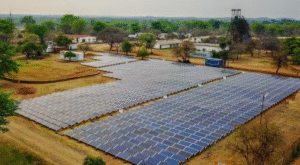
In Kenya, plans are underway to develop a geothermal-powered data centre as part of efforts to increase regional cloud capacity.
Yazbeck emphasized that public sector leadership will be critical in unlocking the full economic benefits of AI in Africa.
He pointed to countries such as the United Arab Emirates, Singapore and Saudi Arabia as examples where government policy and investment have played a central role in accelerating adoption.
Microsoft’s latest push reflects a broader strategy to position itself at the centre of Africa’s evolving AI ecosystem, where access, affordability and infrastructure are becoming key battlegrounds in the global race for technological influence.