



The Empower Africa Business Platform is Now Live !!!

Key Developments

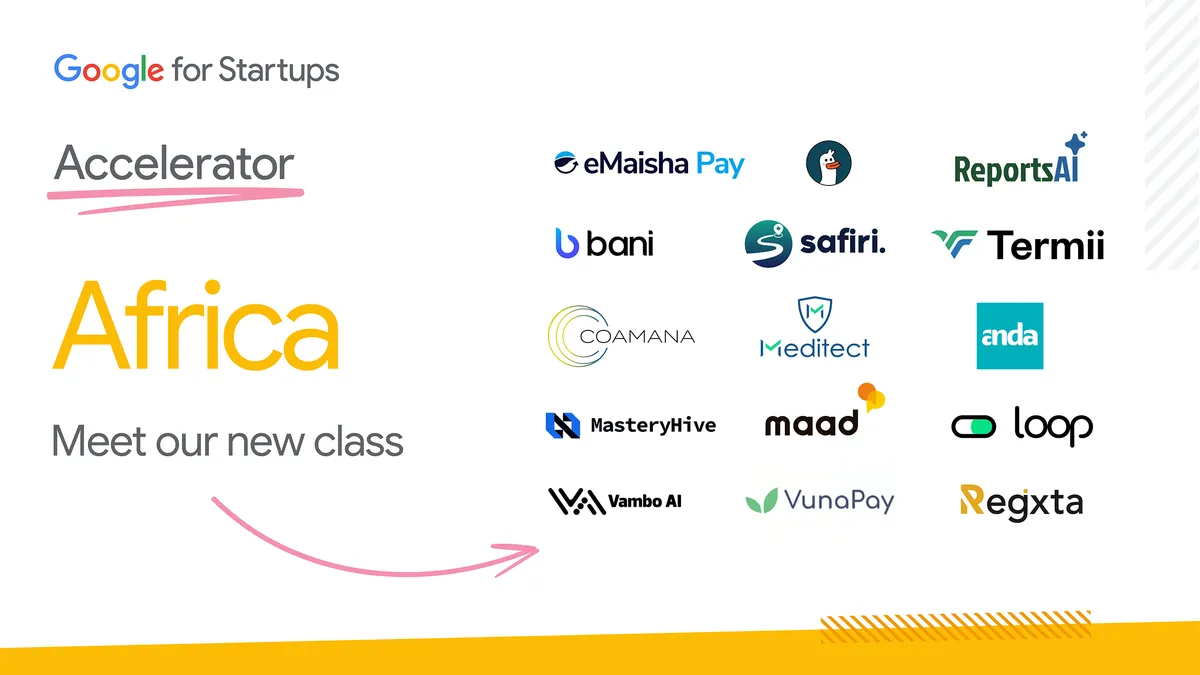
Meet the 15 African Startups Selected for Google’s Accelerator Africa Class 10

Google has unveiled the 10th cohort of its Google for Startups Accelerator Africa, selecting 15 startups from a highly competitive pool of close to 2,600 applicants.

The new class reflects a growing shift toward artificial intelligence-led innovation on the continent, with founders building solutions across financial services, agriculture, healthcare, and enterprise software.

The accelerator is a three-month hybrid programme that combines remote and in-person support.

Startups receive mentorship from Google engineers and industry experts, as well as access to advanced tools such as cloud infrastructure and AI systems.

The goal is to help founders refine their products, scale operations, and position their businesses for further investment.

This latest cohort comes at a time when the program is placing more emphasis on deep technology.

Since its launch in 2018, the accelerator has supported more than 180 startups across Africa, helping them raise significant funding and create thousands of jobs.

The 2026 edition builds on that foundation by focusing on “AI-first” companies tackling practical problems in local markets.

The 15 startups in Class 10 include:

  1. eMaisha Pay (Kenya – Fintech/Agritech) – A digital platform focused on financial services for farmers. It helps agricultural value chains manage payments, credit, and transactions more efficiently.

  2. Bani (Nigeria – Fintech) – Provides cross-border payment infrastructure designed to reduce delays and friction in international transactions for African businesses. 

  3. Safiri (Kenya – Mobility/Logistics) – Works on transport and mobility solutions, using technology to improve the movement of goods and people.

  4. Termii (Nigeria – Communications/Fintech Infrastructure) – Offers APIs and communication tools that allow businesses to send messages, verify users, and manage customer engagement at scale. 

  5. ReportsAI (Kenya – Enterprise Software/AI) – Builds AI-powered tools that automate reporting and data analysis for businesses, improving decision-making.

  6. Coamana (Kenya – Climate/Carbon Markets) – Operates in the carbon and sustainability space, helping businesses track and manage environmental impact through data.  

  7. Meditect (Morocco – HealthTech) – Develops digital health solutions aimed at improving patient care and healthcare system efficiency.

  8. Anda (Egypt – Fintech) – Focuses on financial services, particularly improving access to payments and financial tools.

  9. MasteryHive AI (Nigeria – Fintech/AI) – Uses artificial intelligence to automate financial processes such as reconciliation, fraud detection, and compliance monitoring.  

  10. Maad (Egypt – E-commerce/Logistics) – Provides solutions that support e-commerce businesses, including logistics and supply chain services.

  11. Loop (South Africa – Fintech/Payments) – Builds digital payment systems aimed at simplifying transactions for businesses and consumers.

  12. Vambo AI (South Africa – AI/Language Technology) – Develops AI tools focused on African languages, helping expand digital access for underserved linguistic groups.  

  13. VunaPay (Kenya – Agritech/Fintech) – Offers financial tools for agricultural cooperatives, enabling faster payments and improved financial management for farmers.  

  14. Regxta (Nigeria – Fintech/Compliance) – Provides solutions for regulatory compliance and financial monitoring, supporting businesses in managing risk.  

  15. Duck (Kenya – AI/Data) – Builds AI-driven systems focused on data processing and automation, supporting enterprise efficiency.  

Broader significance

The composition of this cohort highlights how African startups are increasingly applying artificial intelligence to real-world challenges rather than purely experimental use cases.

Many of the selected companies are working in sectors that directly affect economic productivity, such as agriculture, payments, and healthcare.

The strong representation from countries like Kenya and Nigeria also reflects the maturity of their startup ecosystems, while participation from North and Southern Africa shows broader regional growth.

With less than 1% of applicants selected, the programme remains one of the most competitive opportunities for African founders. 

The expectation is that these startups will use the accelerator to strengthen their products, attract capital, and expand into new markets.

Share :

You may also like...