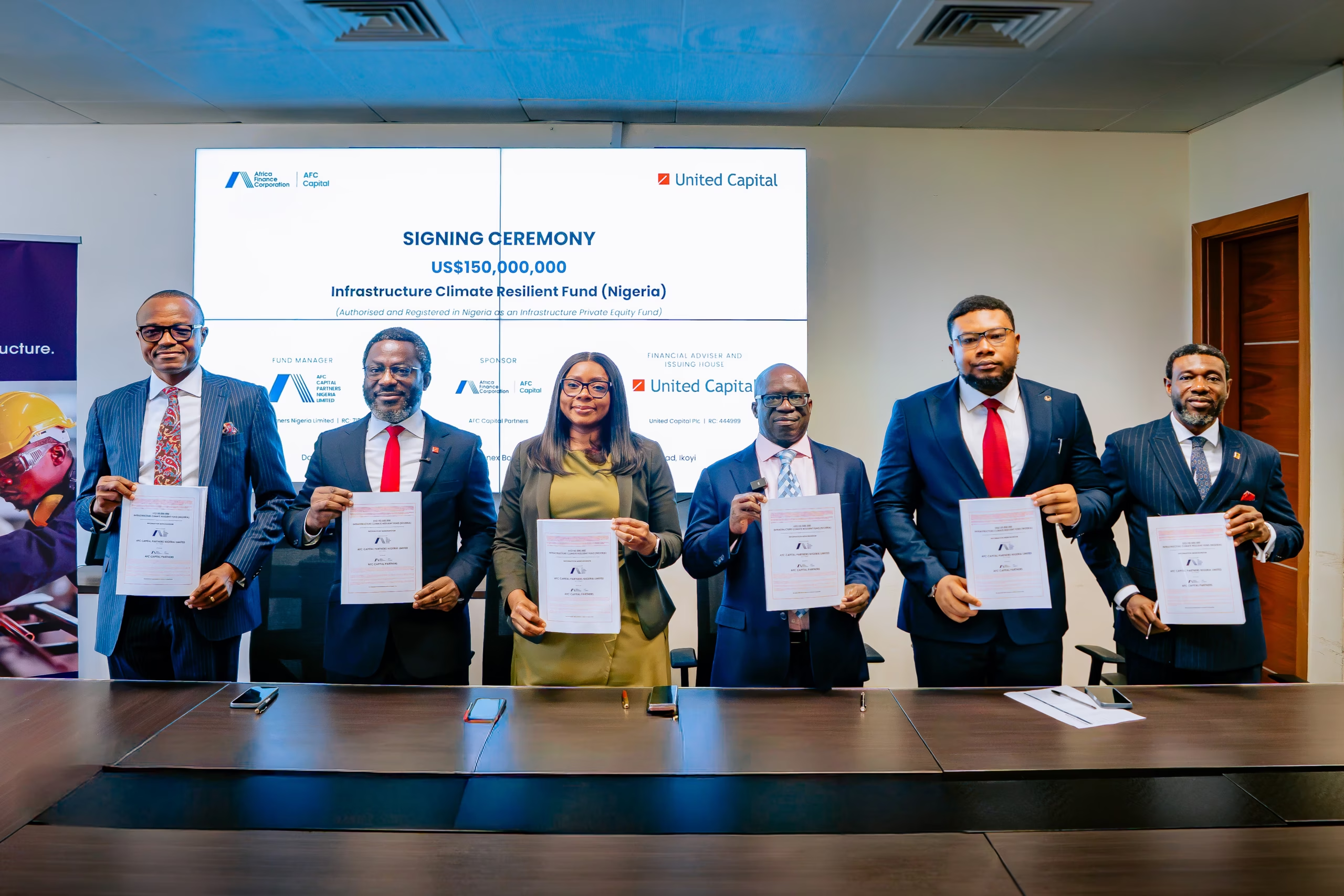
Announced in Lagos on August 24, 2026, ICRF Nigeria is registered with Nigeria’s Securities and Exchange Commission as a closed-end fund.
The platform will provide pension fund administrators, insurers, asset managers, and other institutional investors with access to a diversified portfolio of commercially viable infrastructure investments.
ICRF Nigeria forms part of AFC Capital Partners’ $750 million Infrastructure Climate-Resilient Fund, which integrates climate considerations throughout the planning, design, construction, and operation of infrastructure assets.
The fund targets renewable energy, transport and logistics, digital infrastructure, and industrial development projects across Africa.
Each prospective investment will undergo an assessment of physical and transition climate risks, including exposure to extreme weather, emissions pathways, and climate governance.
This approach is intended to protect the long-term value and operating reliability of infrastructure assets as climate-related risks become more significant for project developers and investors.
The wider fund combines concessional and commercial capital to reduce risks that have historically limited private investment in African climate adaptation projects.
The Green Climate Fund has provided a $253 million first-loss commitment, while the European Investment Bank has committed $52.48 million.
Other participating institutions include the Development Bank of Southern Africa, Cassa Depositi e Prestiti, the Nigeria Sovereign Investment Authority, and several African pension funds.
AFC Capital Partners expects the $750 million fund to mobilize up to $3.7 billion in total financing for a portfolio of 10 to 12 infrastructure projects across the continent.
The Nigerian platform enters a market with a growing pool of long-term savings but limited investment in infrastructure and other alternative assets.
The National Pension Commission reported that 58.07% of Nigerian pension assets were invested in federal government securities at the end of March 2026, while alternative assets and real estate accounted for 3.95%.
This concentration provides important context for ICRF Nigeria because the platform is designed to give pension funds and other institutional investors a structured route into infrastructure without requiring them to invest directly in individual projects.
The diversified portfolio and blended-finance structure are intended to distribute project risk while providing exposure to long-term productive assets.
“ICRF Nigeria gives Nigerian institutional investors a dedicated route into high-quality, climate-resilient infrastructure investments across Nigeria and Africa,” AFC Capital Partners CEO Ayaan Adam said.
Africa Finance Corporation President and CEO Samaila Zubairu said Africa holds more than $4 trillion in domestic resources across pensions, insurance, sovereign wealth funds, and other pools of capital.
He said dedicated investment vehicles are needed to connect these long-term savings with infrastructure, industry, and innovation.
AFC Capital Partners is the wholly owned asset management subsidiary of Africa Finance Corporation and is licensed as a fund manager by Nigeria’s Securities and Exchange Commission.
AFC has invested more than $20 billion across 36 African countries since it was established in 2007.
The launch of ICRF Nigeria extends the fund’s capital-mobilization strategy into Nigeria’s domestic institutional market, creating a direct link between local savings and Africa’s infrastructure requirements.
Its commercial significance will depend on its ability to secure commitments from Nigerian investors and deploy the capital into projects that combine financial performance with measurable resilience to climate risks.