The Development Bank of Southern Africa committed approximately $14.7 million as the fund’s lead development finance institution.
The final close brings together New GX Capital, RMB Ventures, Standard Bank, Nedbank and the DBSA in a vehicle combining commercial and development finance.
Airnergize Capital completed the raise after securing its initial commitments in April 2025 and finished close to the fund’s original fundraising target.
The fund will initially deploy capital into commercial and industrial solar photovoltaic and battery storage assets in South Africa, other sub-Saharan African markets and Indian Ocean island states.
Its wider investment pipeline covers electricity generation, transmission-related infrastructure, water services and gas assets.
The DBSA made its commitment after conducting institutional due diligence on Airnergize Capital’s governance arrangements, investment strategy and decision-making processes.
Although the bank accounts for about 6.2% of the fund’s total capital, its participation provides institutional validation and brings a development mandate to a fund backed largely by commercial financial institutions.
“DBSA’s mandate is to mobilise capital toward infrastructure that supports inclusive growth, and a platform like Airnergize does that at scale rather than one transaction at a time,” said Mahlatsi Molokomme, principal investment officer at the DBSA.
“Backing a fund alongside commercial investors allows us to crowd in private capital rather than compete with it, which is exactly the kind of blended approach South Africa needs if it is going to close its infrastructure investment gap.”
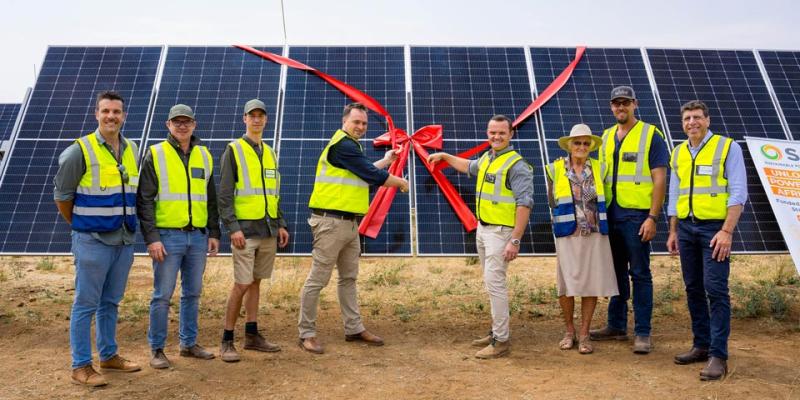
Airnergize Capital’s first investment is Sustainable Power Solutions Africa, an owner, operator and developer of commercial and industrial renewable energy assets.
SPS Africa provides behind-the-meter and front-of-the-meter solar and battery storage systems, along with engineering, construction, operations and maintenance services.
The focus on commercial and industrial energy assets gives the fund access to businesses seeking alternatives to unreliable or constrained electricity supply.
Solar installations and battery systems can also help companies manage energy costs, maintain production and reduce exposure to disruptions from the national grid.
South Africa has expanded the role of private investment in its electricity market as it works to improve generation capacity, transmission infrastructure and grid access.
The World Bank reported in 2025 that increased privately financed renewable energy and improvements in Eskom’s plant performance had contributed to a reduction in the frequency and severity of power cuts.
The government’s wider infrastructure reforms are intended to attract additional private financing and technology into the energy and transport sectors.
“We have built a platform that can turn this capital into operating infrastructure that moves the needle across energy, water and gas, and that contributes to energy security in South Africa and the region,” said Khudusela Pitje, group chief executive of New GX Capital.
Airnergize Capital operates alongside two other New GX Capital investment platforms: AiZAR Capital, which concentrates on digital infrastructure, and Airnergize Ventures, which backs early-stage clean technology and digital businesses.
This structure allows the group to invest across established infrastructure assets, digital systems and younger technology companies at different stages of development.
The fund’s final close increases the pool of institutional capital available for infrastructure businesses that can support electricity reliability, industrial activity and essential services.
Its wider economic contribution will depend on how efficiently the capital is converted into operating projects, particularly in markets where limited transmission capacity, project preparation challenges and financing constraints continue to delay infrastructure investment.