Population Growth and Urbanization Are Raising the Stakes
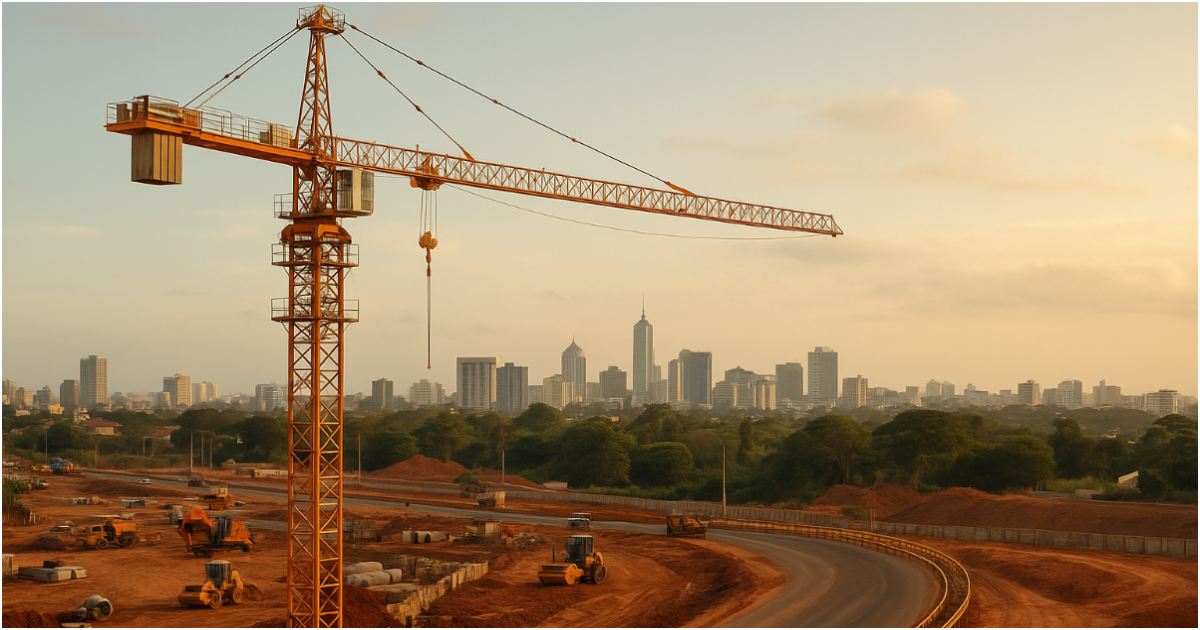
At the forum, Boston Consulting Group’s Zineb Sqalli pointed to a demographic reality that sits at the heart of this challenge: Africa will add one billion people by 2050, and more than half will live in cities.
This shift will reshape the continent’s economic landscape.
Urban centers will need:
Affordable housing
Efficient transport systems
Reliable power
Waste management and sanitation
Digital connectivity
Social services for millions of young people entering the workforce
Without scaled-up investment, urbanization risks increasing congestion, insecurity, and unemployment.
UN-Habitat estimates that African cities require upwards of $25–30 billion annually to build the infrastructure needed for sustainable urban growth.
The gap between what is needed and what is currently available continues to widen every year.
The Climate-Finance Gap Is Even Larger
Beyond traditional infrastructure needs, Africa faces a climate-finance gap that is far more severe.
Experts at the forum noted that the continent requires about $300 billion annually to address climate adaptation and mitigation, but receives only $30 billion — just 10% of the required amount.
This shortfall has direct economic consequences:
Extreme weather events already cost African economies $7–15 billion each year.
Agricultural yields — the backbone of many African economies — could decline by up to 15% by 2050.
Rising food import bills are expected to reach $110 billion by 2025.
For many African countries, climate finance is now not just an environmental issue, it is an economic survival issue.
Food Security as a Strategic Investment Priority
One of the strongest messages from the forum came from Dr. Obaid Saif Hamad Al-Zaabi, who argued that food-security value chains should be treated as a strategic asset class.
This perspective is backed by hard realities.
Around 70% of Africa’s food is produced by smallholder farmers.
Yet these farmers receive less than 3% of commercial lending.
Infrastructure challenges, including poor roads and inadequate, storage contribute to post-harvest losses as high as 30–40% in some regions.
Africa has the potential to become a global food supplier, as the continent holds 60% of the world’s uncultivated arable land.
However, without targeted investment and better financing structures, this potential remains untapped.
Dr. Al-Zaabi called for expanded guarantees and specialized financing vehicles that can support farmers, strengthen agro-processing, and build resilient value chains.
The Missing Middle: Few Bankable Projects
While financing gaps remain large, another challenge has received growing attention: the shortage of bankable projects.
Amadou Hott, former Senegalese economy minister, noted that Africa needs to multiply current project-preparation efforts “by 100 or even 150” to meet demand. This bottleneck occurs long before financing is even mobilized.
Projects struggle because:
Feasibility studies are inadequate or incomplete.
Regulatory frameworks are unclear or inconsistent.
Governments lack technical capacity for project structuring.
Risk levels are perceived as high by investors.
According to the African Development Bank, less than 10% of planned infrastructure projects in Africa reach financial close.
Building a strong pipeline of well-prepared, investment-ready projects is one of the continent’s most urgent priorities.
Domestic Capital Is a Major Untapped Resource
Africa often looks outward for infrastructure financing, but the continent holds significant capital internally that remains underutilized.
Potential domestic sources include:
If just 5% of African pension assets were allocated to infrastructure, it would release over $17 billion annually — enough to finance major energy, transport, and water projects.
However, greater domestic participation requires:
Safe investment frameworks
Clear regulatory guidance
High standards of project governance
Attractive risk-return profiles
Unlocking domestic capital is one of Africa’s strongest pathways to long-term, sustainable infrastructure investment.
Smallholder Farmers: Big Contribution, Small Support
Another striking observation from forum speakers came from Dr. Nasser Al-Kahtani, who noted that small farmers “save the world, but cannot feed themselves.”
The struggles they face are well known:
Limited access to credit
High vulnerability to climate shocks
Lack of mechanization
Inadequate storage and processing capacity
High transport and input costs
Blended finance — combining public, private, and philanthropic capital — offers a practical solution for de-risking investments in agriculture and enabling farmers to participate meaningfully in regional and global markets.
Diaspora Financing: A $95 Billion Opportunity
Africa’s diaspora sent home $95 billion in 2023, surpassing both foreign direct investment and official development assistance. This pool of capital represents a major opportunity for infrastructure financing.
Emerging tools include:
With appropriate governance, transparency, and risk management, diaspora-backed investment can play a bigger role in financing long-term infrastructure.
Conclusion: A Massive Gap, but a Bigger Opportunity
Africa’s $150 billion annual infrastructure gap is daunting, but it also represents one of the biggest investment opportunities of the next generation.
If the continent can address its project-preparation weaknesses, mobilize domestic and diaspora capital, and modernize its legal frameworks, it could unlock new levels of growth.
Bridging the gap would:
Accelerate industrialization
Boost the competitiveness of the AfCFTA
Strengthen food systems
Create millions of jobs
Improve resilience to climate shocks